
Fosi Audio Luna3 Review
We may earn a commission from some links on this page.
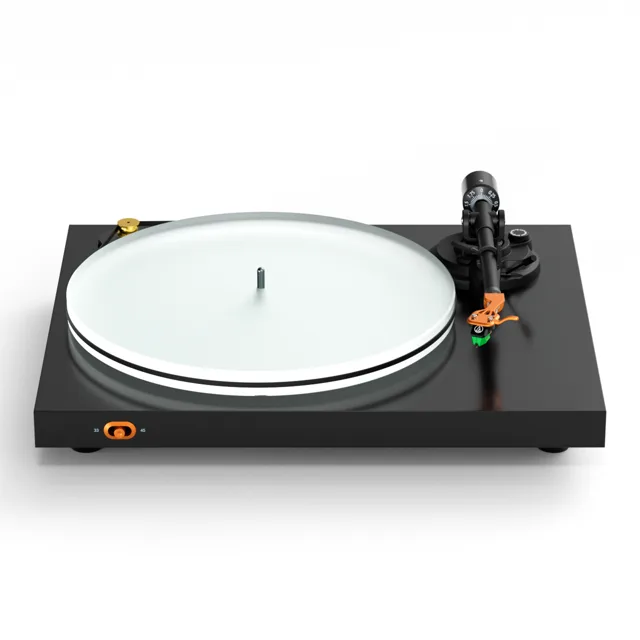
The Fosi Audio Luna3 is a belt-drive turntable built around a simple idea: keep the signal path clean and let the mechanical parts do the work. In practice that means a 300 mm acrylic platter, an 8.6 inch aluminium tonearm with a removable headshell, and an Audio-Technica VM95E cartridge fitted at the factory. It has no phono stage of its own, so it expects a preamp somewhere in the chain. What follows is what the deck is made of, where those choices help a listener, and what to plan for before ordering one.
Key Takeaways
- 300 mm high-mass acrylic platter on an integrated plinth, aimed at damping vibration rather than adding features.
- 8.6 inch aluminium tonearm with a universal headshell connector, so the cartridge can be changed later.
- Audio-Technica VM95E cartridge fitted at the factory, with a stylus that can be replaced on its own.
- Servo-controlled copper motor with a Hall sensor, electronic 33 and 45 rpm change, and auto stop at the end of a side.
- No built-in phono stage, so the deck needs a preamp or an amplifier with a phono input.
Acrylic Platter and Tonearm
The platter is the part you notice first: a 300 mm disc of acrylic, dense and non-magnetic, sitting on a plain integrated plinth. Fosi's argument for it is the usual one for acrylic and it holds up mechanically, because a heavier platter resists small speed changes and damps vibration before it reaches the record. A belt runs from the motor to the platter edge, and the deck as a whole weighs 3.5 kg, light enough to lift onto a shelf but settled enough to stay put while a side plays. The tonearm is 8.6 inches of aluminium with a standard universal headshell connector at the end, which matters more than it sounds: the arm does not lock you into one cartridge for the life of the deck.
Cartridge and Setup
A VM95E cartridge comes fitted in the headshell, a bonded elliptical design that suits the kind of listening a deck at this level is bought for. The stylus is a separate part, so when it wears you replace the stylus rather than the whole cartridge, and because the headshell uses the universal connector a full cartridge change is a matter of sliding one off and another on. Setup follows the familiar pattern for a belt-drive: fit the platter and mat, run the belt around the platter and motor pulley, fit the counterweight, set the tracking force the cartridge asks for, then check alignment. Fosi supplies the 45 adapter, a dust cover and a second mat in the box, so there is nothing else to buy to get a record playing except the preamp.
Detailed Features
The numbers Fosi publishes for the Fosi Audio Luna3 describe a conventional belt-drive deck built to careful tolerances rather than a machine with unusual tricks. Speed accuracy is quoted at plus or minus 0.11%, speed variation at 0.13%, wow and flutter at 0.15% and signal-to-noise at 65 dB. Two speeds are available, 33 and 45 rpm, and the change is electronic rather than a belt moved between pulleys. There is an auto stop at the end of a side and a trigger output for switching connected equipment with the deck. What is missing is just as deliberate: no phono stage, no Bluetooth transmitter, no digital output.
| Specification | What it means |
|---|---|
| Drive | Belt drive, servo-controlled copper motor with Hall sensor |
| Speeds | 33 and 45 rpm, electronic change |
| Speed variation | 0.13% at both speeds |
| Wow and flutter | 0.15% at both speeds |
| Platter | 300 mm acrylic, high mass |
| Tonearm | 8.6 in aluminium, universal headshell connector |
| Cartridge | VM95E, replaceable stylus |
| Phono stage | None built in; an external preamp is required |
| Extras | Auto stop, trigger out, dust cover, two mats, 45 adapter |
| Size and weight | 420 x 112 x 330 mm, 3.5 kg |
Strengths and Weaknesses Overview
Read as a whole, the deck is a set of choices that favour the mechanical side of playback and leave the electronics to the buyer. That suits one kind of listener and asks a little more of another, so it is worth being clear about both.
| What stands out | What to know |
|---|---|
| High-mass acrylic platter and a settled plinth | No phono stage, so a preamp is part of the cost |
| Universal headshell, easy cartridge swaps | The belt is exposed and wants keeping clean |
| Electronic speed change and auto stop | No Bluetooth or digital output at all |
| Replaceable stylus on the fitted cartridge | At 3.5 kg it is light enough to be knocked |
The trade-offs are not faults so much as the other side of the same decisions: a simple signal path, no extra electronics in the box, and a plinth that keeps the deck affordable to build.
Value in a Modest System
Because the Fosi Audio Luna3 has no phono stage, it fits most naturally into a system that already has one: an amplifier with a phono input, or a separate preamp feeding powered speakers or a line input. Bought that way, the money goes into the platter, the arm and the motor rather than into electronics you may already own. The removable headshell and replaceable stylus also mean the deck can follow a listener through a cartridge upgrade without another purchase, which is the part of a turntable that usually dates fastest. What it will not do is add wireless playback or a digital output, so anyone who wants those should look for a deck that includes them.
Frequently Asked Questions
Does the Luna3 Have a Built-in Phono Stage?
No. The deck has no phono stage, so it needs a separate preamp or an amplifier with a phono input. Connect the turntable to that stage, then run the stage into your line input.
Can the Cartridge Be Replaced?
Yes. The arm uses a universal headshell connector, so the whole headshell can be swapped for another one, and the VM95E stylus itself is a replaceable part rather than a fixed assembly.
What Speeds Does It Play?
Two: 33 and 45 rpm, with electronic speed change rather than moving the belt to a second pulley. Fosi quotes 0.13% speed variation and 0.15% wow and flutter.
Does It Stop at the End of a Record?
It has an auto stop function that shuts the motor down when the side finishes. There is also a trigger out that can switch connected equipment on and off with the deck.
What Comes in the Box?
The plinth, the acrylic platter, the belt, a platter mat and a felt mat, the counterweight, the headshell with the stylus fitted, a 45 adapter, a dust cover, the 12 V power supply and a manual.