

Getting started with Hardanger embroidery involves gathering the right tools and mastering a few basic stitches. Choosing even-weave fabrics like 22-count Hardanger or light linen helps keep stitches even, while stabilizers such as fusible interfacing prevent puckering. Stocking the right needles—like Clover gold or milliners—ensures smooth stitching, especially when working with different threads. Learning foundational stitches like Kloster blocks, wrapped bars, and satin stitches builds confidence before exploring more intricate patterns. The process may seem simple at first, but understanding these essentials opens the door to beautiful embroidery projects that are worth the effort.
Essential Tools You Need to Start Hardanger Embroidery
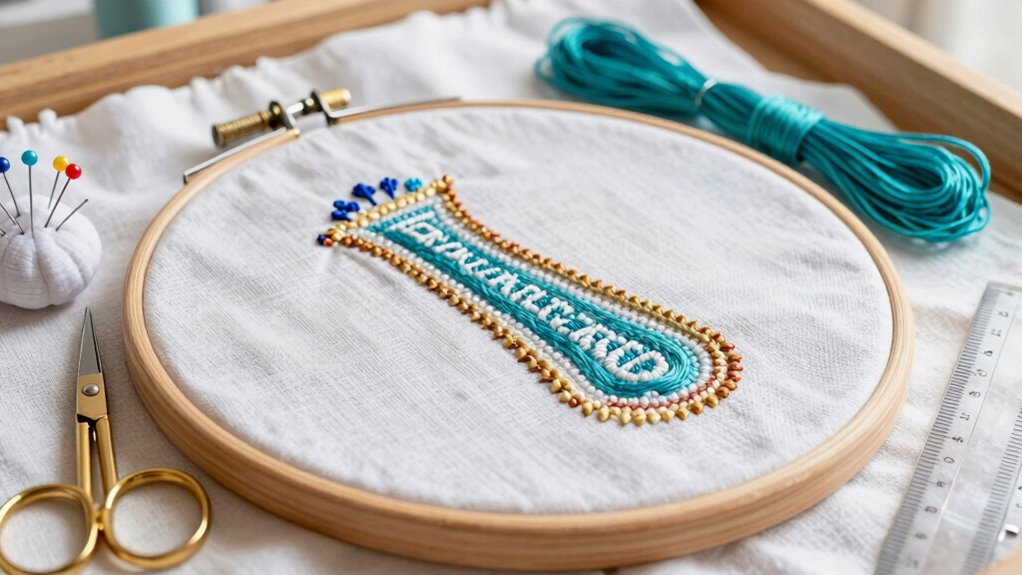
Have you ever wondered what tools are essential when starting hardanger embroidery? The foundation begins with choosing the right fabric, like linen or 22-count Hardanger fabric, which helps keep stitches even and threads easy to remove. A good stabiliser, such as fusible interfacing or Whisperweft, provides light support and prevents puckering, especially when working with delicate fabrics.
Tailored needles are also key. For example, Clover gold embroidery needles are great for thicker floss, while milliner needles suit finer details. It’s important to test different needle sizes to find what fits best.
Preparing threads in 18-inch lengths, deciding on the number of strands, and planning your color palette are equally vital. These tools set the stage for a smooth, enjoyable Hardanger embroidery experience.
Choosing the Right Fabric for Your Hardanger Projects
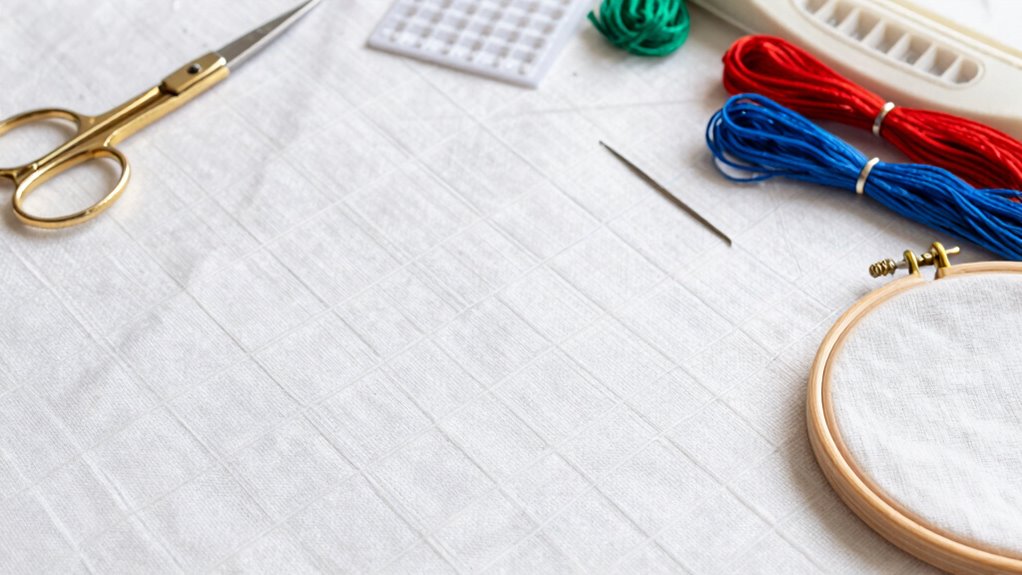
Choosing the right fabric is a foundational step that can make a big difference in the success and enjoyment of a Hardanger embroidery project. The key is selecting an even weave fabric, where the warp and weft threads are the same size and evenly spaced. Hardanger fabric, often 22 count and plain weave, is popular among beginners because it’s easier to stitch and produces reliable results.
Linen with a linen count between 28 and 32 is also a good option, with higher counts offering finer detail but requiring more precise counting. It’s best to avoid dressmaking linen with smaller threads or fabrics that aren’t even woven, as these can cause issues with thread tension. While Aida fabric can be used, it’s not ideal for beginners due to its mesh-like weave that complicates thread withdrawal and cutting.
Must-Know Basic Stitches for Beginners in Hardanger
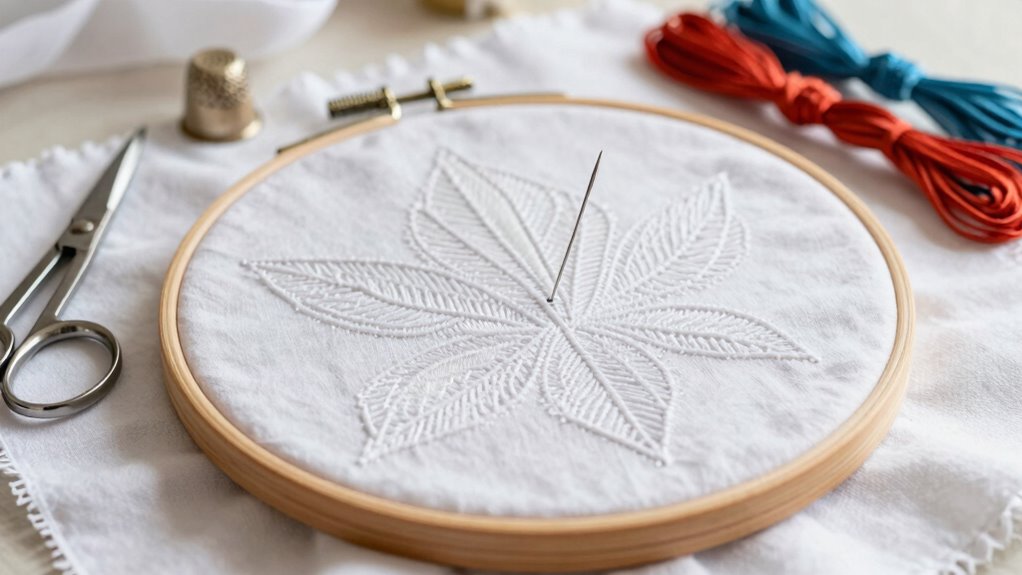
What are the essential stitches every beginner should master to start their Hardanger embroidery journey? For newcomers, learning a few key stitches makes all the difference. The most important are Kloster blocks, wrapped bars, and satin stitches.
Kloster blocks form the foundation for many designs, creating neat squares on the fabric grid. Wrapped bars are essential for filling spaces and creating decorative borders. They involve wrapping thread around the needle to add texture and strength. Satin stitches are used for filling small areas with smooth, shiny surfaces. These stitches are applied on a counted grid, helping to secure the fabric and prepare for cutting and opening spaces later.
Mastering these basics builds confidence and provides a strong starting point for more complex Hardanger projects.
Tips for Transferring Patterns and Maintaining Accuracy
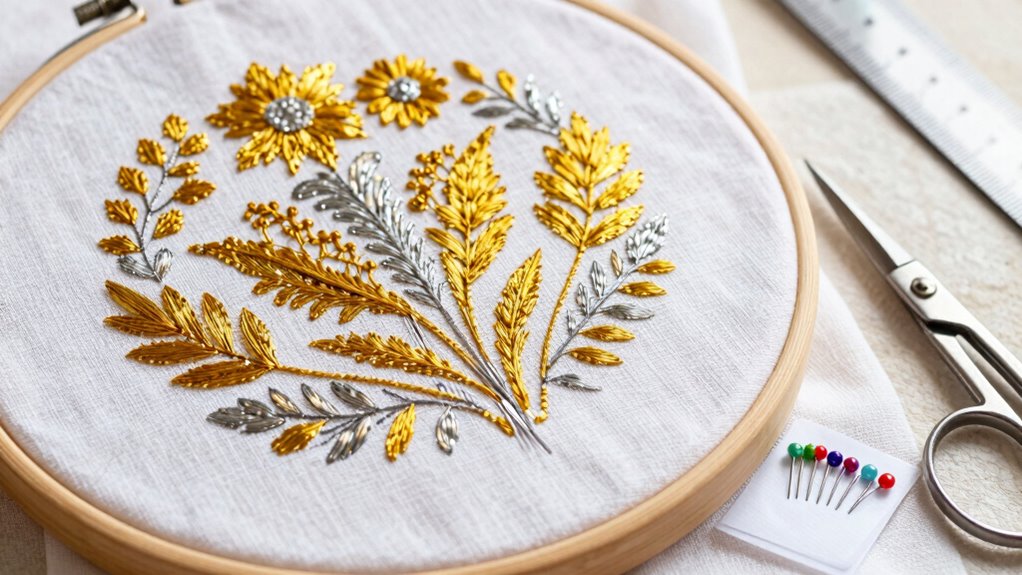
Transferring a pattern onto fabric might seem like a small step, but it’s actually the foundation of a successful Hardanger project. To learn hardanger embroidery techniques effectively, choose the right transfer method—like tracing or carbon paper—and keep a steady hand. For better visibility, opt for plain or neutral fabrics instead of dark ones, which can complicate the process.
Before transferring, press the fabric well to reduce puckering and ensure precise placement. Planning color and thread placement during transfer helps prevent misalignment when you begin stitching. Keep a labeled, step-by-step reference or chart handy to stay accurate as you count and cut later. Whether working from a hardanger embroidery book cover or patterns, these tips will help maintain accuracy and make your embroidery journey enjoyable.
Common Mistakes to Avoid When Starting Hardanger Embroidery
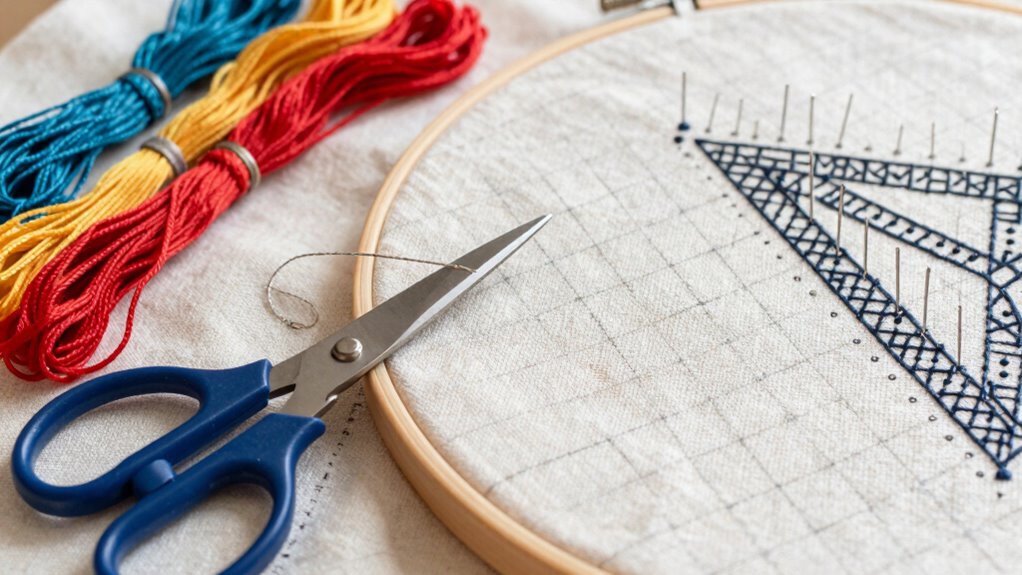
Getting started with Hardanger embroidery is an exciting step, but it’s easy to make some common mistakes that can throw off the whole project. For example, using Aida fabric isn’t ideal, as its square mesh makes thread withdrawal and cutting more difficult. Instead, beginners should choose plain weave fabrics like 28–32 count linen or 22 count Hardanger fabric, which have consistent grids.
Ensuring the fabric is an even weave, so warp and weft are the same size, is crucial for neat, aligned stitches. Additionally, skipping stabilizer or cutting corners before all stitches are complete can cause puckering or uneven openings. To keep things smooth, double-check your pattern, secure the fabric properly, and don’t rush the cutting process.
| Mistake | Explanation |
|---|---|
| Using Aida fabric | Difficult to withdraw thread and cut |
| Choosing uneven linen | Leads to misaligned stitches |
| Cutting early | Causes gaps and puckering |