

Quick Answer: These two machines are built for different jobs. The Juki TL-2010Q is a long-arm straight-stitch machine for quilting and heavy sewing, with a top speed of 1,500 stitches per minute. The Janome Sewist 780DC is a fully computerised home machine with 80 built-in stitches, three one-step buttonholes and a back-lit LCD screen, at a top speed of 820 stitches per minute. Pick the Juki if quilting and speed come first; pick the Janome if you want a wide stitch range and screen-guided settings. If embroidery matters as much as garment sewing, a combo such as the Brother SE700 handles both jobs on one table.
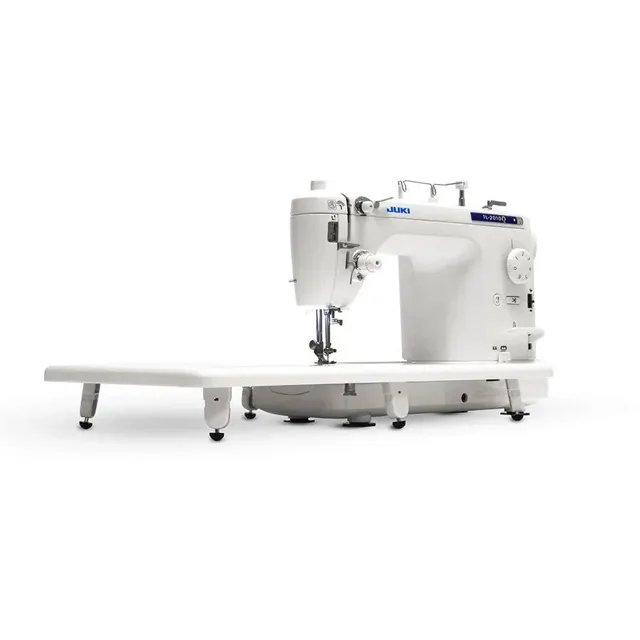
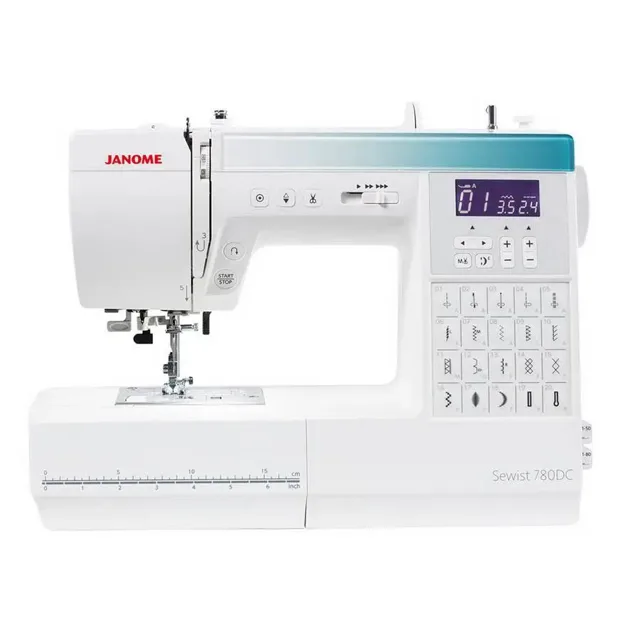
Table of Contents
Juki vs Janome at a Glance
| Feature | Juki TL-2010Q | Janome Sewist 780DC |
|---|---|---|
| Stitch range | Straight stitch only | 80 built-in stitches, including decorative stitches |
| Speed | Up to 1,500 SPM, adjustable from 200 SPM | Up to 820 SPM, with speed control |
| Controls | Speed control and knee lifter, no stitch menu | Back-lit LCD showing the stitch, foot, width and length |
| Buttonholes | None: straight stitch only | Three one-step buttonholes |
| Automation | Thread trimmer, knee lifter, needle threader | Thread cutter, needle threader, auto-lock stitch, auto bobbin winder |
| Build | Die-cast aluminium arm and bed | Rigid die-cast internal aluminium frame |
| Suits | Quilting, long seams and dense layers | Garments, home projects and decorative stitching |
What Decides the Choice
The decision comes down to five things: the stitches each machine can make, the top speed, how much automation it offers, what it is built from, and what you actually sew. The Juki is a specialist machine and the Janome is a general one, so the two lists overlap less than a straight feature count suggests. Everything below is what the makers list for each model.
Juki Overview
The Juki TL-2010Q is a long-arm quilting and sewing machine with a die-cast aluminium arm and bed. It makes one kind of stitch, straight, and it is built to make that stitch at speed: the maker lists a range from 200 to 1,500 stitches per minute. The feature list is aimed at quilters rather than at stitch variety. There is a heel-activated thread trimmer on the foot controller, a knee lifter for raising the presser foot with your leg, a needle up/down stop position, drop feed dogs for free-motion work, an automatic needle threader, an auxiliary table and four presser feet.
Janome Overview
The Janome Sewist 780DC is a fully computerised machine with 80 built-in stitches: 20 are direct-select and the other 60 are chosen from a slide-out chart. A back-lit LCD screen shows the stitch, the recommended foot and the default width and length. There are three one-step buttonholes, an automatic thread cutter, an auto bobbin winder, a built-in needle threader and an auto-lock stitch. Satin stitches can be elongated up to five times. The feed system uses seven feed dogs, and the machine has start/stop and speed control, needle up/down, adjustable foot pressure, a twin needle setting and drop feed. The body is built around a rigid die-cast internal aluminium frame, the top speed is 820 stitches per minute, and Janome lists a 25-year limited warranty on the machine.
Speed and Power
The gap in speed is the clearest difference. Juki lists the TL-2010Q at up to 1,500 stitches per minute, with a minimum of 200 SPM for controlled work, and describes the machine as handling dense stacks such as denim and fleece. The Janome's maximum is 820 stitches per minute, with speed control for slower work. For long seams and free-motion quilting, the Juki's higher top speed and its knee lifter are the practical advantages; for general sewing where you change stitches often, the Janome's speed is more than enough and the LCD makes the changes quicker.
Key Differences
- The Juki is straight-stitch only; the Janome has 80 stitches, including decorative ones.
- The Juki reaches 1,500 SPM; the Janome reaches 820 SPM.
- The Janome has a back-lit LCD and three one-step buttonholes; the Juki has neither.
- The Juki's arm and bed are die-cast aluminium; the Janome uses a die-cast internal aluminium frame inside a computerised body.
- The Janome carries a 25-year limited warranty on the machine.
Who Should Pick Each
Pick the Juki if you quilt, sew long seams, or work with dense fabric, and you would rather have speed and a straight stitch than a menu of patterns.
Pick the Janome if you want a wide stitch range, one-step buttonholes and a screen that shows your settings, and you sew a mix of garments and home projects.
Frequently Asked Questions
Is the Juki TL-2010Q good for beginners?
Juki describes it as suitable for beginners who are serious about quilting, because there are few settings to learn. A beginner who wants decorative stitches and buttonholes will get more from the Janome.
Can the Janome Sewist 780DC handle quilting?
It can be used for quilting: it has drop feed, adjustable foot pressure and a seven-piece feed system. It is a home sewing machine rather than a long-arm quilter, so for large quilts the Juki's long arm and higher speed are the better fit.
Are these machines good for upholstery?
The Juki is the closer of the two: its die-cast aluminium arm and bed and its 1,500 SPM top speed are aimed at dense layers. The Janome is a household machine, and Janome's warranty is written for normal household use.
Which machine is better for decorative stitches?
The Janome, clearly: it has 80 built-in stitches and satin stitch elongation. The Juki makes a straight stitch only.
Verdict on Juki vs Janome
The Juki TL-2010Q and the Janome Sewist 780DC are not really competing for the same buyer. The Juki is the machine to choose when the work is quilting, long seams or heavy fabric and you want speed without menus. The Janome is the machine to choose when you want many stitches, buttonholes and on-screen settings for everyday sewing. Decide what you sew most, and the choice between them becomes simple.